• Skip to primary navigation
  • Skip to main content
  • Skip to footer
ppi_logo_rgb_outlinedv3
address
  • Home
  • About
    • Introduction
    • PPi’s 20th Anniversary
    • The Strength of PPI HC
    • Our Mission
    • Global Reach
    • Customers
    • Team
    • Gallery
  • Services
    • Landscape Assessments
    • Market Access Strategy
    • Research and Insights
    • Pricing Strategy
    • Reimbursement Strategy
    • Health Technology Assessment dossiers
    • Health Economics
    • Orphan & Rare Diseases
  • Communications
    • Case Studies
    • Publications
    • Conferences
  • Contact
  • Home
  • About
    • Introduction
    • PPi’s 20th Anniversary
    • The Strength of PPI HC
    • Our Mission
    • Global Reach
    • Customers
    • Team
    • Gallery
  • Services
    • Landscape Assessments
    • Market Access Strategy
    • Research and Insights
    • Pricing Strategy
    • Reimbursement Strategy
    • Health Technology Assessment dossiers
    • Health Economics
    • Orphan & Rare Diseases
  • Communications
    • Case Studies
    • Publications
    • Conferences
  • Contact

Publications

Adam Barak’s response to Sarah Bosely’s article printed in The Guardian, 12th April 2018

  1. Home>
  2. category>
  3. Communications>
  4. Publications>
Competition and collaboration to cut the price of medicines

On 9 April 2018, an article by Sarah Boseley on the pricing of pharmaceuticals was printed in Britain's Guardian newspaper. Adam Barak's response can be seen here, which the Guardian printed on 12 April.

Competition and collaboration to cut the price of medicines

The large graphic accompanying your article (The cost of drugs, 9 April) has a major omission, one of the most important factors affecting medicine pricing and affordability. (There are others involving “international reference pricing” and “parallel trade” but that’s a separate debate.)

It charts the 13 years of rigorous clinical development required by regulators to ensure new drugs achieving regulatory approval are safe and effective. As the article states, all this R&D costs an absolute fortune.

The crucial missing piece is what happens next. Patent exclusivity is limited by regulations enabling other companies to make copies of the original licensed product (within a lot less than the 20 years referred to). Once these “generic” drugs are launched, the originators’ revenues can quickly diminish to next to nothing, meaning that the companies investing in the R&D have a relatively limited window to make their money. With such a relatively short duration to (more than) recoup the costs of investment, drug prices have to be higher than necessary. The issue is even more pronounced for medicines used to treat relatively rare conditions, where the cost per patient has to be necessarily high. If it wasn’t then, simply, fewer new medicines would be made.

I’ve often advocated that if patent exclusivity was extended for two to three years, lower prices would be possible and in everyone’s interest, except those generic companies who’d have to wait a little longer before they could begin sales with their copies, but surely all the risk is being taken by and all the clinical unmet need is being satisfied by the originator. Giving them a few years longer to make sales (at a lower price) seems a sensible compromise, but under the complexity of international regulatory rules, changing such policy is extremely unlikely to happen.
Adam Barak
PPi Healthcare Consulting


Publications

  • Adam Barak’s response to Sarah Bosely’s article printed in Guardian, 12th April 2018
  • Maximizing Rapid (!) Patient Access for Funded Usage of Innovative Orphan and Rare Disease Technologies
  • New UK PPRS Arrangements, 2014
  • Pricing policy in Europe: of cars, football, and prescription drugs
  • Orphan drugs: pricing, reimbursement and patient access
  • Paying the price
  • Caution: thresholds can sometimes be difficult to cross
  • UK PPRS Overhaul
  • Pharmaceutical pricing: Overview of the impact of genericisation
  • Pricing policies to handle patent loss or expiry

TESTIMONIALS

“With their depth of market access experience across the EU, Adam Barak and his team at PPi Healthcare are well-positioned to provide timely, insightful guidance on pricing and reimbursement. ProMetic’s global strategic launch plans involving ultra-orphan therapies, have been greatly enhanced by our collaboration with PPi.”

Kristine Dorward, Director, Marketing & Business Development, ProMetic Life Sciences Inc.

“I want to let you know that the feedback from my colleagues after your presentation was that they are impressed by the amount of information that you have gathered within the research within such a short period.”

Ramona Schmid, Global Market Access, Pricing and Reimbursement Manager, HRA Pharma

“I have worked with PPi on several projects and I will work with them again. The first project was a European pricing study for an orphan product. Having already completed one study with a competitor, I found the PPi team to be particularly insightful, having taken the time to completely understand this complex project.”

Thomas W. MacAllister JD, PhD, Vice President of R&D and General Counsel, Remedy Pharmaceuticals

“Recently I completed an assessment to inform the collection of pharmacoeconomic data in a clinical study in the US and Europe. The team again were very insightful and we had unexpected value-added when we found a member of the PPi had been involved in the pricing and reimbursement activities relating to one of our comparables. Great team, great results!”

Thomas W. MacAllister JD, PhD, Vice President of R&D and General Counsel, Remedy Pharmaceuticals

Filed Under: Publications

Maximizing Rapid (!) Patient Access for Funded Usage of Innovative Orphan and Rare Disease Technologies

  1. Home>
  2. category>
  3. Communications>
  4. Publications>
White Paper

by Adam Barak MCIM
Global Genes: 2017 Rare Partnering Investors Forum;
September 14, 2017

Introduction

With such high levels of clinical unmet need, for technologies aimed at treating rare conditions the importance of getting these sometimes life-saving therapies to patients across the world as soon as possible is extremely important.

Oftentimes there are no or few available therapies for these conditions and so everything that can be done needs to be done to streamline the necessarily thorough and rigorous preparatory activities aimed at securing both payer/insurance funding and access.

This Paper for Global Genes 2017 focuses on two areas where we believe more can be done to facilitate this “Rapid Patient Access”, namely:

1. Understanding which work needs to be done to secure international market access (good funding, prices and formulary access) for a novel technology/drug in rare disease and

2. Understanding the international market priorities for a novel technology/drug in rare disease, including commercial market prioritization by region and country

Overview of Orphan Drug international regulations

The Orphan Drug Act of 1983 paved the way for the development of drugs that treat rare diseases. Orphan drugs (OD) can cost hundreds of thousands of dollars annually as with relatively small patient numbers, manufacturers are often obliged to charge higher than normal prices to recoup investment. Payers and insurers traditionally covered these therapies because the small populations involved did not typically lead to significant cost exposure. However payer sensitivity to the cost of ODs is rising due to the accelerated rate of new launches of these agents amid intensified general economic pressure on healthcare, resulting in payers showing increased levels of scrutiny about pricing and coverage for ODs.

Rare disease definitions

  • USA (1983) <200,000 cases
  • Europe (2000) <5 per 10,000
  • Japan (1993) 2.5 per 10,000
  • World Health 6.5-10 per 10,000

Organization

Globally some countries have concessionary pricing and reimbursement (P&R) and Health Technology Assessment (HTA) schemes for orphan and rare diseases (ORDs), e.g. the UK, Germany, Italy and France, but many do not so that securing special concessions for coverage of ODs is far from straightforward. Even in those markets that do have special approaches to ORDs, manufacturers will still need to ensure that appropriate value messages are substantiated and in line with technology’s pricing. Therefore to achieve good funding and access, early planning and payer engagement are essential.

Concessions and incentives to support the development of ODs include the following, but are generally based on pre-approval measures rather than post-approval concessions on payer evidence requirements or pricing.

  • Extended market exclusivity (7-10 years)
  • Tax and fee reductions (clinical trials, inspections, MAs)
  • Protocol assistance, free advice
  • Research grants
  • Central European filing / expedited regulatory review
  • Single format annual report to either FDA or EMA

Recent trends in OD funding

A fairly new development in the US, through Formulary Benefit Design (FBD), has seen patient share of OD costs rising and this is expected to continue. The shift in FBD could affect patient access to ODs and therefore drug utilization. Manufacturers will have to ensure to understand payer impact on the uptake of their ODs in development. They will also benefit from being better prepared to develop strategies to ensure patient access to and the affordability of their orphan agents.

US payers expect the management of ODs to intensify. Manufacturers, providers, and patients can expect the following strategies from insurers that administrate commercial and Medicare health plans:

  • Scrutiny of OD utilization where costs approach and exceeding the $50,000 per-patient per-year threshold
  • Increased focus on appropriate use of ODs, often restricting use to approved indications
  • Rising burden on patients through cost-sharing (i.e. co-insurance and higher co-payments), as well as existing annual or lifetime maximum payments.

In Europe many ODs receive differential funding across the region, where a drug can effectively be denied to patients in one country while patients in neighboring countries can receive it. An example is eculizumab (Soliris®) which although is reimbursed in many countries at >$100,000 / year, some countries have decided not to fund it, in this case the Authorities (NCPE in Ireland and TLV in Sweden) citing that it does not represent adequate value for money.

In many cases ODs initially denied reimbursement are subsequently granted it, following submission of further data or price negotiation. This inevitably means that some vital ODs can be denied to

patients for over a year. Such turnaround decisions have been seen with Jakavi® (ruxolitinib for the treatment of disease-related splenomegaly or symptoms in adult patients with primary myelofibrosis) in Sweden and ivacaftor (Kalydeco® for cystic fibrosis) in Ireland.

Approaches for maximizing patient access for funded usage of innovative orphan and rare disease technologies

Given the circumstances described above of payers’ financial pressures and increasing rigor in assessing value and affordability of ORD treatments, we have cited 2 areas which OD manufacturers need to pay particular attention to if OD patient access is to be maximized.

1. Understanding which work needs to be done to secure international market access (good funding, prices and formulary access) for a novel technology/drug in rare disease

Oftentimes early clinical development focuses on regulatory requirements and milestones and not payer or access requirements. There is little point in investment and clinical studies targeted primarily to ensure that a drug is registered if the evidence does not support the commercial value of the drug (e.g. an appropriate price which payers will accept) and an evidence package which supports positive and quick formulary decision making.

Clinical studies therefore need to be designed that meet the requirements for ensuring rapid market access as well as approval, and work needs to be undertaken to establish which activities need to be conducted to similarly support rapid formulary access post approval in all countries of interest, as these activities invariably differ between countries and even sometimes between regions in the same country.

2. Understanding the international market priorities for a novel technology/drug in rare disease, including commercial market prioritization by region and country

Commercial decision making is driven often by forecasts of market potential in various countries, with activities being based for example on which are the largest markets, or the most familiar countries etc. Sometimes with ORDs the prevalence of conditions in different countries may not be known and in some genetic diseases, it is often seen that smaller population countries have a disproportionately high number of patients with a particular condition. Furthermore, some countries have formal and well-used schemes enabling the use of un-approved drugs (Early Access Schemes) in patient populations with high unmet need.

It is therefore important to derive good knowledge of international market potential and advance access arrangement schemes when designing clinical trials, resourcing staff and planning commercial activities so that patient populations can quickly be identified and actions undertaken to support access to the new therapies as soon as possible.

Maximizing rapid patient access to ODs

In order to try and maximize the chances for developed ODs securing favorable P&R and rapid patient access following regulatory approval, PPi HC has developed its “Checklist-20”, representing a breadth of activities that manufacturers and investors are advised to consider from early stage development onwards. The list is not exhaustive but aims to mitigate some of the issues described above (delayed access, inappropriate pricing, varied payer evidence requirements etc.) and does act as a useful guide

to the types of preparatory activities that should be conducted to support ORD patients receiving novel therapeutics as soon as possible.

ORD Market Access: Strategic Planning using “Checklist 20”

  1. Resourcing needs analysis including market access roadmap
  2. Pre-approval use (Early Access). Whether to provide it, how, where, when charging considerations etc.
  3. Landscape assessment (current status, treatment centers, Standard of Care etc.)
  4. Reimbursement data needs (clinical, economic, QoL etc)
  5. Payer research in n countries to explore value arguments and to inform the P&R strategy
  6. Physician research in n countries to explore value arguments, likely adoption and to inform the P&R strategy
  7. Identifying patient numbers per country
  8. Securing formal / informal payer guidance where available / required to inform clinical development programme
  9. Identify any patient access-supporting schemes that may be accessible or required (patient assistance programs, patient access schemes etc.)
  10. Explore specific ring-fenced funds for ORD reimbursement and how to access them
  11. Develop international pricing and reimbursement strategy
  12. Price and reimbursement submission (including submission / dossier preparation)
  13. HTA submission, including health economic modelling for those markets requiring it
  14. Securing codings and exemptions etc.
  15. Objection handler with supportive references
  16. National market entry guidance (central vs regional, hospital direct engagement etc.)
  17. Country prioritization and Launch sequencing strategy
  18. Identify / participate in relevant meetings
  19. Identify/ contact relevant treatment centers
  20. Identify / contact relevant associations (patient and professional)

Further reading

Orphan drugs: pricing, reimbursement and patient access

IJPHM, Volume 5, Number 4. 2011

Adam Barak & Jyoti Shankar Nandi

https://www.emeraldinsight.com/doi/abs/10.1108/17506121111190121?journalCode=ijphm


Publications

  • Adam Barak’s response to Sarah Bosely’s article printed in Guardian, 12th April 2018
  • Maximizing Rapid (!) Patient Access for Funded Usage of Innovative Orphan and Rare Disease Technologies
  • New UK PPRS Arrangements, 2014
  • Pricing policy in Europe: of cars, football, and prescription drugs
  • Orphan drugs: pricing, reimbursement and patient access
  • Paying the price
  • Caution: thresholds can sometimes be difficult to cross
  • UK PPRS Overhaul
  • Pharmaceutical pricing: Overview of the impact of genericisation
  • Pricing policies to handle patent loss or expiry

TESTIMONIALS

“With their depth of market access experience across the EU, Adam Barak and his team at PPi Healthcare are well-positioned to provide timely, insightful guidance on pricing and reimbursement. ProMetic’s global strategic launch plans involving ultra-orphan therapies, have been greatly enhanced by our collaboration with PPi.”

Kristine Dorward, Director, Marketing & Business Development, ProMetic Life Sciences Inc.

“I want to let you know that the feedback from my colleagues after your presentation was that they are impressed by the amount of information that you have gathered within the research within such a short period.”

Ramona Schmid, Global Market Access, Pricing and Reimbursement Manager, HRA Pharma

“I have worked with PPi on several projects and I will work with them again. The first project was a European pricing study for an orphan product. Having already completed one study with a competitor, I found the PPi team to be particularly insightful, having taken the time to completely understand this complex project.”

Thomas W. MacAllister JD, PhD, Vice President of R&D and General Counsel, Remedy Pharmaceuticals

“Recently I completed an assessment to inform the collection of pharmacoeconomic data in a clinical study in the US and Europe. The team again were very insightful and we had unexpected value-added when we found a member of the PPi had been involved in the pricing and reimbursement activities relating to one of our comparables. Great team, great results!”

Thomas W. MacAllister JD, PhD, Vice President of R&D and General Counsel, Remedy Pharmaceuticals

Filed Under: Publications

New UK PPRS Arrangements, 2014

  1. Home>
  2. category>
  3. Communications>
  4. Publications>
Pharmaphorum

In May 2014 PPi’s Managing Director Adam Barak authored an article reviewing the new UK PPRS arrangements for the web-based pharmaceutical media and debate provider, Pharmaphorum. The article hosted by Pharmaphorum contains the ABPI’s response to the new PPRS arrangements, along with excerpts from Adam’s original article.

Visit Pharmaphorum.com

Adam’s full article can be seen here ( PDF format)

Publications

  • Adam Barak’s response to Sarah Bosely’s article printed in Guardian, 12th April 2018
  • Maximizing Rapid (!) Patient Access for Funded Usage of Innovative Orphan and Rare Disease Technologies
  • New UK PPRS Arrangements, 2014
  • Pricing policy in Europe: of cars, football, and prescription drugs
  • Orphan drugs: pricing, reimbursement and patient access
  • Paying the price
  • Caution: thresholds can sometimes be difficult to cross
  • UK PPRS Overhaul
  • Pharmaceutical pricing: Overview of the impact of genericisation
  • Pricing policies to handle patent loss or expiry

TESTIMONIALS

“With their depth of market access experience across the EU, Adam Barak and his team at PPi Healthcare are well-positioned to provide timely, insightful guidance on pricing and reimbursement. ProMetic’s global strategic launch plans involving ultra-orphan therapies, have been greatly enhanced by our collaboration with PPi.”

Kristine Dorward, Director, Marketing & Business Development, ProMetic Life Sciences Inc.

“I want to let you know that the feedback from my colleagues after your presentation was that they are impressed by the amount of information that you have gathered within the research within such a short period.”

Ramona Schmid, Global Market Access, Pricing and Reimbursement Manager, HRA Pharma

“I have worked with PPi on several projects and I will work with them again. The first project was a European pricing study for an orphan product. Having already completed one study with a competitor, I found the PPi team to be particularly insightful, having taken the time to completely understand this complex project.”

Thomas W. MacAllister JD, PhD, Vice President of R&D and General Counsel, Remedy Pharmaceuticals

“Recently I completed an assessment to inform the collection of pharmacoeconomic data in a clinical study in the US and Europe. The team again were very insightful and we had unexpected value-added when we found a member of the PPi had been involved in the pricing and reimbursement activities relating to one of our comparables. Great team, great results!”

Thomas W. MacAllister JD, PhD, Vice President of R&D and General Counsel, Remedy Pharmaceuticals

Filed Under: Publications

Pricing policy in Europe: of cars, football, and prescription drugs

  1. Home>
  2. category>
  3. Communications>
  4. Publications>
RX Communications

Article published by Rx Comms: Health Outcomes Communicator 4/11/11, and republished by Health Economics in its newsletter in 2012.

There is a tug-of-war going on between the European Commission, with laws intended to protect the free market, and business sectors hoping to claim (or retain) exclusivity. National EU governments are using those laws to their advantage to obtain prescription drugs for the lowest prices.

By Adam Barak

European businesses and consumers are increasingly aware of an emerging seismic shift in the way that goods and services are supplied in their respective countries, controlling both price and product availability, on everything from cars to televised sports to pharmaceuticals. In the ultimate irony, this sea change is being brought about by European Commission laws intended to protect the free market.

Car prices are a useful example to understand EU prescription drug pricing policies. In the 1980s, consumers discovered that cars were more expensive in some countries than in others. For UK consumers, those savings were around 30% or more on the purchase price, leading some UK consumers to buy their cars across the Channel. Manufacturers were not happy, unsurprisingly, given that they set their prices in different markets based on an assessment of consumer willingness to pay and the price of alternative (nationally-sourced) products, not the price that may be considered suitable in a different country.

In response, manufacturers raised impediments to discourage such importing: warranties may not be honoured for cars purchased abroad, right-hand-drive cars may not be available from retailers in left-hand-drive countries and insurance companies may be reluctant to cover such unofficially imported vehicles. But manufacturers ultimately realised that, with knowledge of such discounts abroad for a near-identical product, some consumers would buy abroad and import. Many new businesses (personal import brokers) sprung up to take advantage of differential pricing, as manufacturers scrambled to predict the proportion of customers likely to buy abroad vs. those more likely to buy the domestic product at the national price level. By doing those calculations, car manufacturers hoped to optimise revenues by charging appropriate prices by market while accepting that personal import brokers would be able to supply cheaper, foreign-sourced cars to the customer prepared to ignore the official franchises.

This phenomenon of differential pricing and product import brokers has since invaded pharmaceuticals, with a twist.  In most European countries, the prices of medicines are effectively determined not by the manufacturer selling them, but by the monopsonistic government paying for them. Britain and Germany have been exempt from this, representing some of the few countries where nominally, manufacturers have been able to set their own prices (at levels that consumers would be willing to pay), however new legislation will see Germany (2011) and the UK (2014) fall in line with most other European countries in having prices effectively determined by the government.

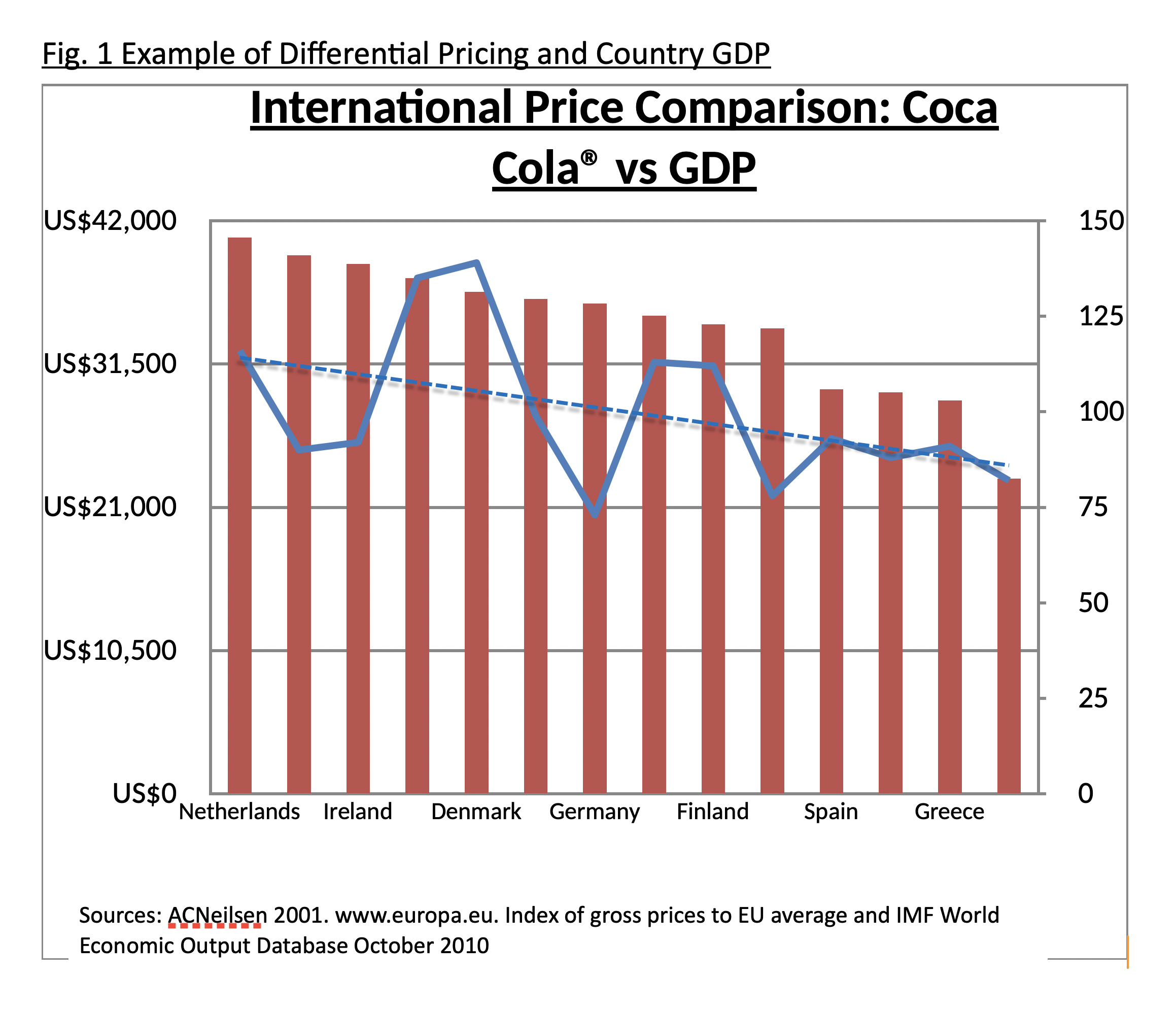
While the EU operates globally as a common marketplace, pharmaceutical prices often vary across markets: typically higher prices in higher GDP countries and lower prices in lower GDP countries (as well as wealthier markets with strict criteria for determining the value of a new medicine) – See Box 1.

box01_adam

Just like car buyers seeking bargains abroad, European governments and wholesalers are able to take advantage of international price differentials. In medicines, European law has ruled it legal for wholesalers operating in markets where prices are low to buy medicines from local distributors and sell them to pharmacies in other EU countries where the domestic prices for the same products are higher; this is known as parallel trade, and it is the reason why some packs of drugs sold in local pharmacies in the UK, for example, might have Greek, Spanish or French writing.

Payers in the higher-priced markets benefit, as they are able to provide cheaper drugs than those that can be supplied nationally. In fact, in many countries, the national government encourages this practice by offering pharmacies extra incentives to dispense a PI (parallel import) instead of nationally-sourced product.  As with cars, pharmaceutical manufacturers have attempted to restrict the practice to protect profit margins, using legal challenges such as copyright infringement, intellectual property infringement, safety arguments (drugs can be repackaged by the wholesaler), and the use of quotas, but the wholesalers and regulators have clearly established case law that now must be accepted.

In pharmaceuticals, the twist on differential pricing with cars is the concept of International Reference Pricing (IRP) – a process by which a country sets the maximum price for a funded medicine by referencing the prices already set for the same medicine in other countries (see Box 2). So, the price that one European government determines is the right price for its country can be used to set a price in other countries through the twin processes of PI and IRP.

box02_adam

IRP has two results for payers and consumers, one intended, and one unintended: lower prices for medicines, and fewer medicines available for lower-priced markets. When a manufacturer develops a new medicine – whether it be a skin cream or a breakthrough cancer treatment –  if one EU country is prepared to only pay half the price of another, then the manufacturer either has to accept the lower revenue from higher-priced markets or, it will decide not to make that drug available in the lower-priced market at all. There is plenty of evidence that patient access to innovative new medicines is being hindered in exactly this way due to the commercial pressures IRP puts on manufacturers.

Another possible unintended consequence of IRP – and one that strikes at the heart of whether healthcare should be regulated in the same way as other business sectors – is a reduction in medical research, which is funded by pharmaceutical manufacturer profits. Is it right that in order to fund R&D, higher-GDP countries should pay higher prices than lower-GDP countries for the same drugs (differential pricing)? Or, putting it another way, should a manufacturer be able to sell a drug at a low price in a poorer market and at a higher price in a richer one? In free markets, for products such as cars, hamburgers, and fizzy drinks, it is absolutely normal to have higher prices in wealthier markets (see Fig 1), but for pharmaceuticals, governments are effectively setting drug prices, so this relationship between GDP and product price simply is not possible. If richer markets contribute (through the prices paid by their respective health systems) the same amount to fund R&D as much poorer countries, then, it has been argued, innovation itself will suffer and so will the opportunities for significant medical breakthroughs.

International Price Comparison - Coca Cola vs GDP

Which leads us to football…and the Olympics. Whether it be the right of a pub owner to show football matches using overseas satellite feeds or a Liverpudlian purchasing tickets to the 2012 London Olympics from a vendor in The Netherlands (see Box 3), the European Court of Justice (ECJ) will be adjudicating on these issues, in much the same way as it has on PI cases in medicines frequently throughout the last 15 years.

The end result is that, according to a strict interpretation of EU law, it will become increasingly difficult, if not impossible, for a company to make a good or service available in one country at a low price and in a different country at a higher price. The ECJ ruling will mean that consumers, be they TV football viewers, Olympics attendees, car buyers, or retail pharmacists, should be able to access, directly or through intermediaries, products at the lowest price available from any EU country, regardless of a country’s ability to pay, the GDP differential between the two markets, or whether such a policy leads to reduced availability of the product.

One could easily argue that healthcare is a special case – that motor bikes or hamburgers are an individual’s choice whether to purchase at price X given that there are alternative means of transport and hot snacks. But for medicines, where the choice of suitable products may be limited and where governments rather than distributors or manufacturers effectively set prices, the current IRP and PI mechanisms seem anachronistic, not serving the long-term interest of patients, payers, or consumers.

The impact of PI and IRP on company revenues is significant but the economic impacts extend beyond corporate profit margins. If EU law and accepted practice effectively compel suppliers to make products available to anybody in the EU at prices established in any other EU country, then either margins in higher-priced markets will be greatly reduced (through sales of cheap imports or by price-lowering), or territories may be left out when companies are deciding where to launch. In the football example (Box 3), in the UK the impact of this has been estimated at £70m/year with anticipated lower salaries, job reductions, and even the viability of certain Premier League clubs being questioned. For pharmaceuticals, we have already seen that new drugs are not always launched in each country because of these pricing controls and influences.

PI and IRP for sports

Whilst EC case law continues to make no recognition of the sometimes enormous differences between Member States’ GDP, and that citizens and payers in wealthier markets can (and should?) pay more than those in poorer markets, the EC and EU governments’ practices will serve only to restrict access to goods and services rather than to encourage it. Companies developing products for multiple markets need to consider their market access strategy very carefully indeed.

References

[1] 2009 European Commission GDP per capita data at  https://epp.eurostat.ec.europa.eu/portal/page/portal/statistics/

[2] Pub landlady’s European case threatens to scupper Premier League’s £1.78 billion TV deal. Kelso P. Daily Telegraph, February, 2011

Publications

  • Adam Barak’s response to Sarah Bosely’s article printed in Guardian, 12th April 2018
  • Maximizing Rapid (!) Patient Access for Funded Usage of Innovative Orphan and Rare Disease Technologies
  • New UK PPRS Arrangements, 2014
  • Pricing policy in Europe: of cars, football, and prescription drugs
  • Orphan drugs: pricing, reimbursement and patient access
  • Paying the price
  • Caution: thresholds can sometimes be difficult to cross
  • UK PPRS Overhaul
  • Pharmaceutical pricing: Overview of the impact of genericisation
  • Pricing policies to handle patent loss or expiry

TESTIMONIALS

“With their depth of market access experience across the EU, Adam Barak and his team at PPi Healthcare are well-positioned to provide timely, insightful guidance on pricing and reimbursement. ProMetic’s global strategic launch plans involving ultra-orphan therapies, have been greatly enhanced by our collaboration with PPi.”

Kristine Dorward, Director, Marketing & Business Development, ProMetic Life Sciences Inc.

“I want to let you know that the feedback from my colleagues after your presentation was that they are impressed by the amount of information that you have gathered within the research within such a short period.”

Ramona Schmid, Global Market Access, Pricing and Reimbursement Manager, HRA Pharma

“I have worked with PPi on several projects and I will work with them again. The first project was a European pricing study for an orphan product. Having already completed one study with a competitor, I found the PPi team to be particularly insightful, having taken the time to completely understand this complex project.”

Thomas W. MacAllister JD, PhD, Vice President of R&D and General Counsel, Remedy Pharmaceuticals
“Recently I completed an assessment to inform the collection of pharmacoeconomic data in a clinical study in the US and Europe. The team again were very insightful and we had unexpected value-added when we found a member of the PPi had been involved in the pricing and reimbursement activities relating to one of our comparables. Great team, great results!”

Thomas W. MacAllister JD, PhD, Vice President of R&D and General Counsel, Remedy Pharmaceuticals

Filed Under: Publications

Orphan drugs: pricing, reimbursement and patient access

  1. Home>
  2. category>
  3. Communications>
  4. Publications>
Pharmaceutical and Healthcare Marketing

Published in International Journal of Pharmaceutical and Healthcare Marketing
Volume 5, Number 4, pp299-317

Abstract
To provide a description of principal aspects of policy and practice associated with orphan drugs and treatments of rare diseases, and give perspectives on new and emerging approaches for addressing patient access. Information has been synthesized from a wide variety of sources including the author’s experience and familiarity with this topic, having over the past 13 years developed market access strategies for many orphan drugs. This is supplemented by pertinent information from conferences, meetings and articles published over the last twenty years and from policy documents released by relevant regulatory bodies.

Follow this link to order

Publications

  • Adam Barak’s response to Sarah Bosely’s article printed in Guardian, 12th April 2018
  • Maximizing Rapid (!) Patient Access for Funded Usage of Innovative Orphan and Rare Disease Technologies
  • New UK PPRS Arrangements, 2014
  • Pricing policy in Europe: of cars, football, and prescription drugs
  • Orphan drugs: pricing, reimbursement and patient access
  • Paying the price
  • Caution: thresholds can sometimes be difficult to cross
  • UK PPRS Overhaul
  • Pharmaceutical pricing: Overview of the impact of genericisation
  • Pricing policies to handle patent loss or expiry

TESTIMONIALS

“With their depth of market access experience across the EU, Adam Barak and his team at PPi Healthcare are well-positioned to provide timely, insightful guidance on pricing and reimbursement. ProMetic’s global strategic launch plans involving ultra-orphan therapies, have been greatly enhanced by our collaboration with PPi.”

Kristine Dorward, Director, Marketing & Business Development, ProMetic Life Sciences Inc.

“I want to let you know that the feedback from my colleagues after your presentation was that they are impressed by the amount of information that you have gathered within the research within such a short period.”

Ramona Schmid, Global Market Access, Pricing and Reimbursement Manager, HRA Pharma

“I have worked with PPi on several projects and I will work with them again. The first project was a European pricing study for an orphan product. Having already completed one study with a competitor, I found the PPi team to be particularly insightful, having taken the time to completely understand this complex project.”

Thomas W. MacAllister JD, PhD, Vice President of R&D and General Counsel, Remedy Pharmaceuticals

“Recently I completed an assessment to inform the collection of pharmacoeconomic data in a clinical study in the US and Europe. The team again were very insightful and we had unexpected value-added when we found a member of the PPi had been involved in the pricing and reimbursement activities relating to one of our comparables. Great team, great results!”

Thomas W. MacAllister JD, PhD, Vice President of R&D and General Counsel, Remedy Pharmaceuticals

Filed Under: Publications

  • Page 1
  • Page 2
  • Go to Next Page »
PPI Logo

Adding global value through local expertise and insight

Adding global value through local expertise and insight

PPi Healthcare Consulting Ltd
5 The Chambers, Vineyard
Abingdon-on-Thames
Oxfordshire
OX14 3PX, UK

Further information:
E: info@ppi.consulting
T: +44 (0)7811 363098

Privacy Policy

GEP

© copyright 2020
PPi Healthcare Consulting Ltd
All rights reserved

This website uses cookies to improve your experience. To view our privacy policy click here. To change your cookie preferences:Cookie settingsor ACCEPT
Privacy & Cookies Policy

Privacy Overview

This website uses cookies to improve your experience while you navigate through the website. Out of these cookies, the cookies that are categorized as necessary are stored on your browser as they are essential for the working of basic functionalities of the website. We also use third-party cookies that help us analyze and understand how you use this website. These cookies will be stored in your browser only with your consent. You also have the option to opt-out of these cookies. But opting out of some of these cookies may have an effect on your browsing experience.
Necessary
Always Enabled
Necessary cookies are absolutely essential for the website to function properly. This category only includes cookies that ensures basic functionalities and security features of the website. These cookies do not store any personal information.
Non-necessary
Any cookies that may not be particularly necessary for the website to function and is used specifically to collect user personal data via analytics, ads, other embedded contents are termed as non-necessary cookies. It is mandatory to procure user consent prior to running these cookies on your website.
SAVE & ACCEPT